
Recruiting the Next Generation of Skilled Labor
Fortune 200 Utility Company
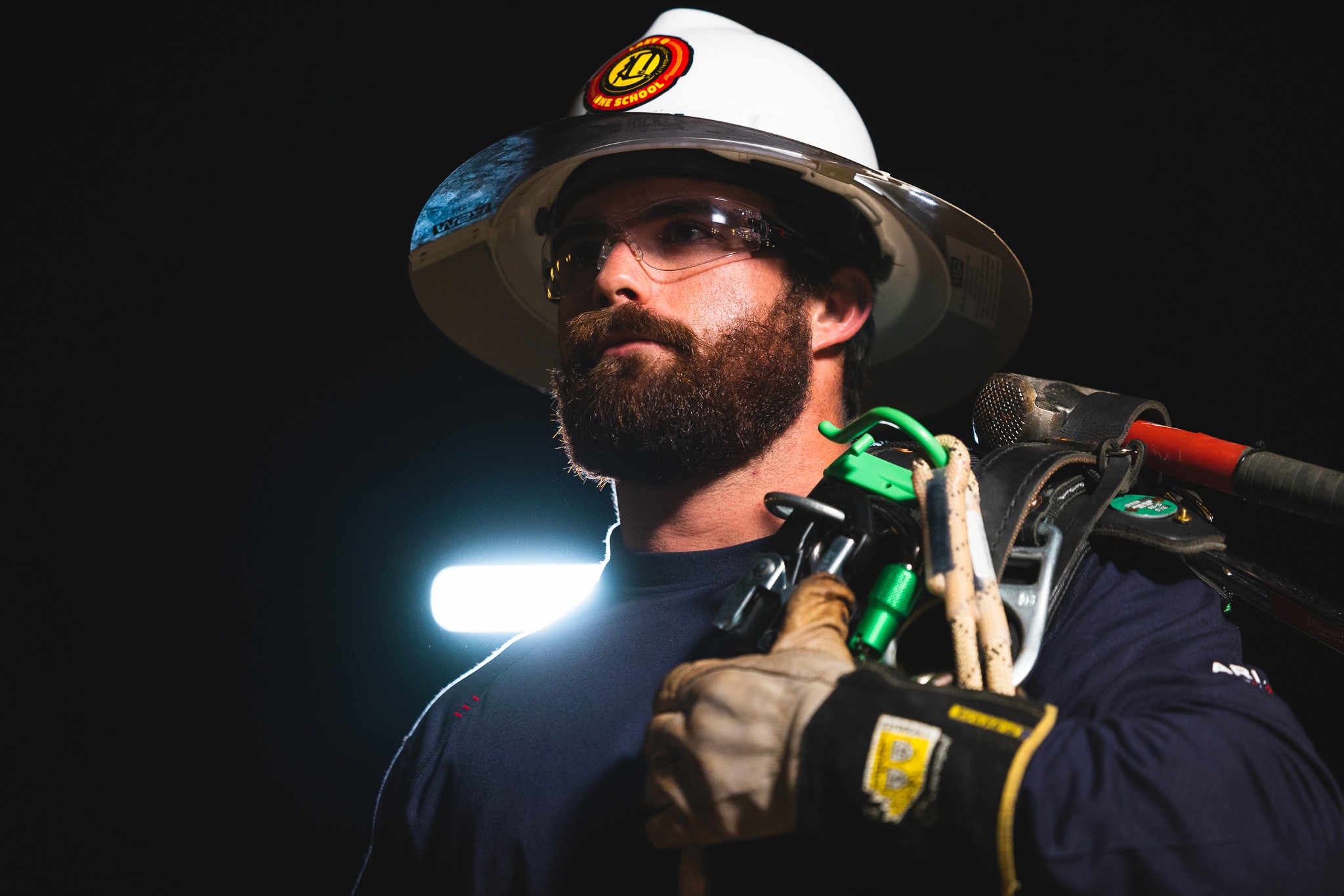
How to Build a Workforce Pipeline When the Next Generation Doesn't Know Your Industry Exists
Building a recruitment strategy that matched how people actually decide, not how the industry thought they should.
5-minute read:
THE CHALLENGE
A Fortune 200 utility company faced a workforce crisis that couldn't be solved with better job postings.
Experienced trades workers were aging out faster than younger generations were replacing them. But the problem wasn't a lack of opportunity. It was a lack of belief. Younger audiences didn't see skilled trades as a viable career path, and current workers couldn't effectively advocate for the profession because they were speaking the wrong language.
This wasn't a recruitment problem. It was a diffusion problem: the career path wasn't spreading naturally from one generation to the next. Career adoption had stalled because the people who loved the work couldn't translate their enthusiasm into terms that skeptical audiences would trust.
Leadership needed to understand why natural adoption had stopped, and how to restart it systematically.
OUR APPROACH
We designed research to decode the psychological barriers preventing career path adoption, then built a strategy to bridge the gap between belief and proof.
Listen: Understanding the Disconnect
We conducted in-depth interviews across three audience segments:
18–26-year-olds considering technical degrees or career alternatives
27–45-year-olds who currently work as linemen
27–45-year-olds who used to work in trades but left
We recruited participants across California, Texas, New York, New Jersey, and other key markets, screening for career interest, family background, and proximity to community-serving roles. We also analyzed cultural trends, social media behavior, and digital content to understand how younger audiences were forming career perceptions.
Locate: Finding the Translation Gap
The research revealed a classic behavioral mismatch. Experienced workers were communicating with the enthusiasm of people who already believed in the career: talking about pride, purpose, and the satisfaction of hands-on problem solving. But younger audiences were evaluating careers like pragmatists: looking for proof of stability, growth, and social legitimacy.
Current workers would say: "I love my job because I like my friends and I get paid."
Younger audiences heard: "Old-fashioned work with no clear future."
More critically, we discovered that younger audiences were making fast, intuitive judgments about trades careers based on outdated cultural signals, while the industry was trying to convince them with slow, rational arguments about benefits and job security. The emotional decision was made before the logical case was even heard.
Lead: Redesigning the Advocacy System
Instead of improving recruitment messages, we redesigned how the organization communicated career value entirely.
We identified the specific proof points and social signals that pragmatic audiences actually use to evaluate career viability:
Advancement pathways (not passion)
Technology integration (not traditional craft)
Peer social proof (not industry statistics)
Then we equipped current workers and recruiters to speak in that language.
We translated advocacy messaging from belief-driven to proof-driven:
Before: "I love my job because I like my friends and I get paid."
After: "I love my job because it's a meaningful contribution to my local and national community, I get to work hard for something that matters, and I get paid."
Selected slides from the audience segmentation and message positioning phase:


WHAT WE DELIVERED
This was a full-stack engagement spanning research, strategy, and creative direction over 6 months, with ongoing support for nearly 2 years.
Core deliverables included:
Audience segmentation and behavioral maps defining who to target, why they matter, and how to reach them authentically
Go-to-market strategy briefs aligning recruiting, messaging, and brand positioning
Creative frameworks including messaging dos and don'ts, partnership guidelines, and athlete sponsorship criteria
Website rebuild from the ground up, repositioning hiring and retention as the #1 brand priority. Every page pointed toward either "powering modern life" or "join us and find meaningful work"
Event strategy and execution, including 4 annual national-level recruiting events
Social media ambassador program, growing from 0 to 30 high school students who fit the profile of people naturally drawn to trades careers and could authentically evangelize to their peers
Internal communications overhaul, including an employee app to reach 50,000+ workers with streamlined, aligned messaging

THE IMPACT
The organization gained a systematic framework for crossing the career adoption gap. Instead of hoping younger audiences would discover trades careers organically, they could deliberately bridge the distance between belief and proof.
Measurable outcomes:
400% increase in website traffic
300% rise in platform-wide engagement
Recruiting efforts streamlined and began showing consistent improvement over time
Strategic outcomes:
Leadership excitement and buy-in across divisions
Social media proof and organic brand buzz
Internal alignment on core messaging and recruiting language
A repeatable advocacy system that could be applied to future workforce initiatives


The work proved that workforce challenges often aren't about finding the right people. They're about enabling effective advocacy. When you understand the psychological barriers preventing adoption, you can design systems that pull people across the gap rather than pushing messages at them.
This engagement demonstrates how behavioral research transforms recruitment from a volume game into a precision strategy for building belief.
