Quanta Services
RECOGNITION OVER PERSUASION
Brand Strategy, Design & Activation • Fortune 200 Energy & Utilities • 2021–2024 • North America & Puerto Rico
A company under pressure to reach everyone gave up scale for a single community, and found the people who had been raised for the work all along.
The trades are short of people, and the industry has decided this is an argument it can win. The standard response is a persuasion campaign: buy reach against young people, explain that the work pays well and matters, and hope enough of them change their minds. It treats the shortage as a problem of opinion, so the plan is always the same, say it louder and say it to everyone.
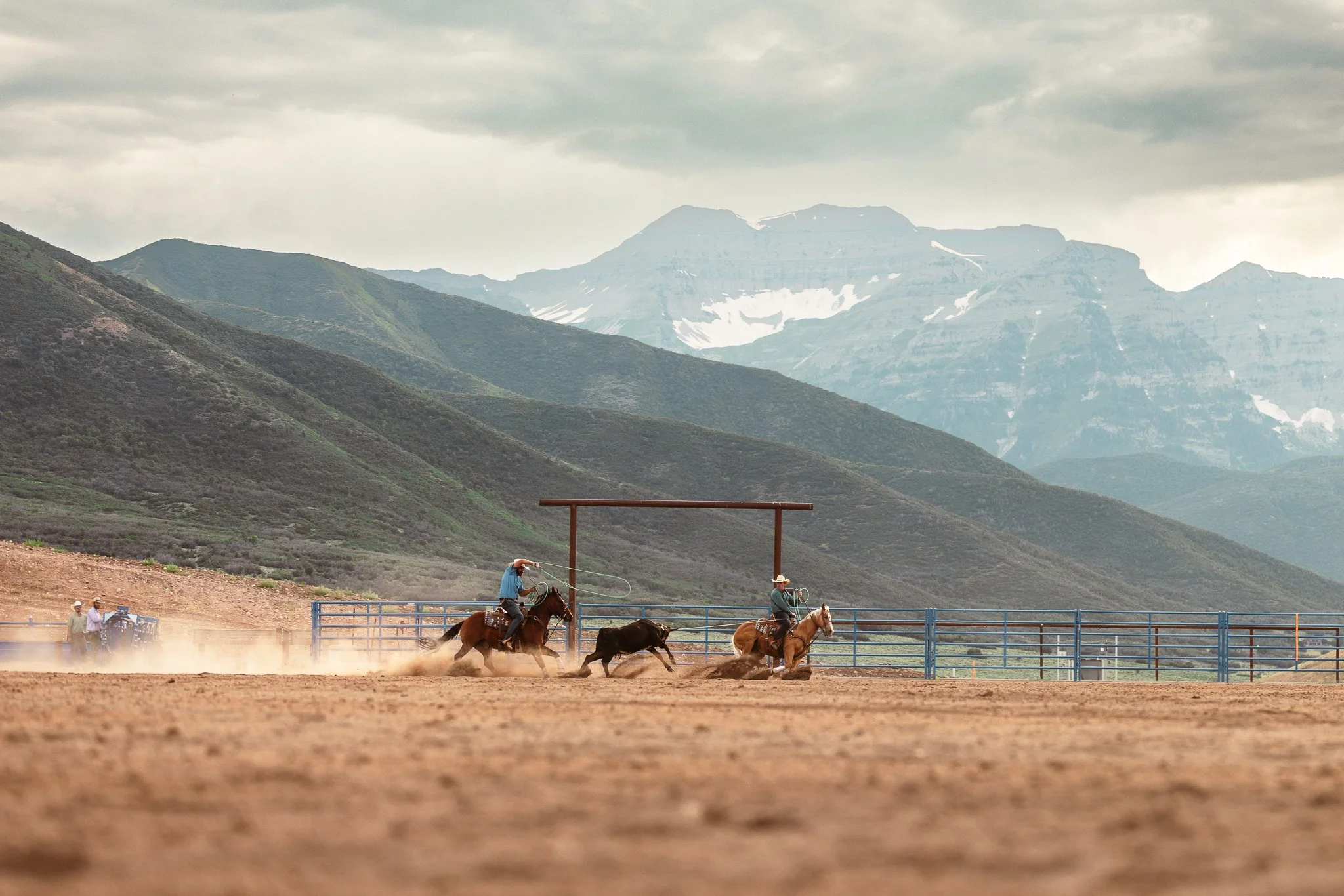
Quanta felt that pressure like everyone else. The obvious move was to spend against the widest audience available; the research told us to do the opposite. Before any real work began, extensive qualitative study pointed to the narrowest audience of all, the one most open to what Quanta had to say: the farm and ranch communities already raising people for exactly this life. This work ran alongside the enterprise program across the same four years and answered a different question, where the people who already fit the work were standing rather than how to talk about it. It started in that research and carried into films, events, a national partnership, and a recruiting operation built to be walked into.
OVERVIEW
The engagement ran from market and cultural analysis to locate the audience, then down into a documentary film platform, print and digital campaign design, a partnership with the National High School Rodeo Association, a Quanta rodeo team, and in-person recruiting at more than 20 national events.
Applications ran into the hundreds and rose year over year: young people volunteering into the program rather than being recruited into it. The work outlived its brief when leadership pulled the films into executive events and internal communications.
The people the industry says it cannot find are already out there, raised in communities that hand down the exact qualities the work demands.
CONVICTION
The qualities the work demands are formed long before anyone sees a job posting: comfort with risk, early mornings, physical competence, pride in doing a thing correctly. They come from a family, a ranch, and knowing an animal that has to be fed whether or not you feel like it. No campaign installs that in a person, and none needs to when entire communities are already producing it. So the research pointed away from the skeptic every workforce campaign argues with, toward people who required no convincing and had simply never been looked at.
Nobody is talked into this work; they are raised into it. Believing that costs a company reach, and reach is the one thing a workforce budget is usually judged on. choosing western and agricultural communities meant walking past far larger audiences and accepting a slower clock, since a 15 year old at a high school rodeo is a hire five years out. It also meant handing the microphone to people who do not work in communications and letting them say it their way. Naming the belief settled the question every workforce program fights about. Persuasion buys media and recognition buys presence, so the money moved from impressions to arenas, and the plan stopped being a message and started being a place to show up.
POSITION
The person here had already been formed by the time Quanta arrived, so the job was to be recognizable to them rather than persuasive at them. That person is the high school kid competing in rodeo or visiting an FFA convention hall, raised on early mornings and animals and consequences, who has never once seen a line drawn from that life to a career that pays like a career. Everyone else was set aside, including the far larger audience a reach plan would have bought. What Quanta offered them was belonging: the feeling that the people already doing this work were raised the same way you were, and that showing up would be a continuation rather than a departure.
VOICE
The entire campaign ran on a single act of restraint, the company speaking last and least. The audience can smell a pitch from the parking lot, so the work was built to be recognized rather than delivered: unscripted, first person, spoken by the athletes and never explaining rodeo to anyone. Everything below was made to sound and look like it came from inside that world, not from a marketing department visiting it.
Verbal identity
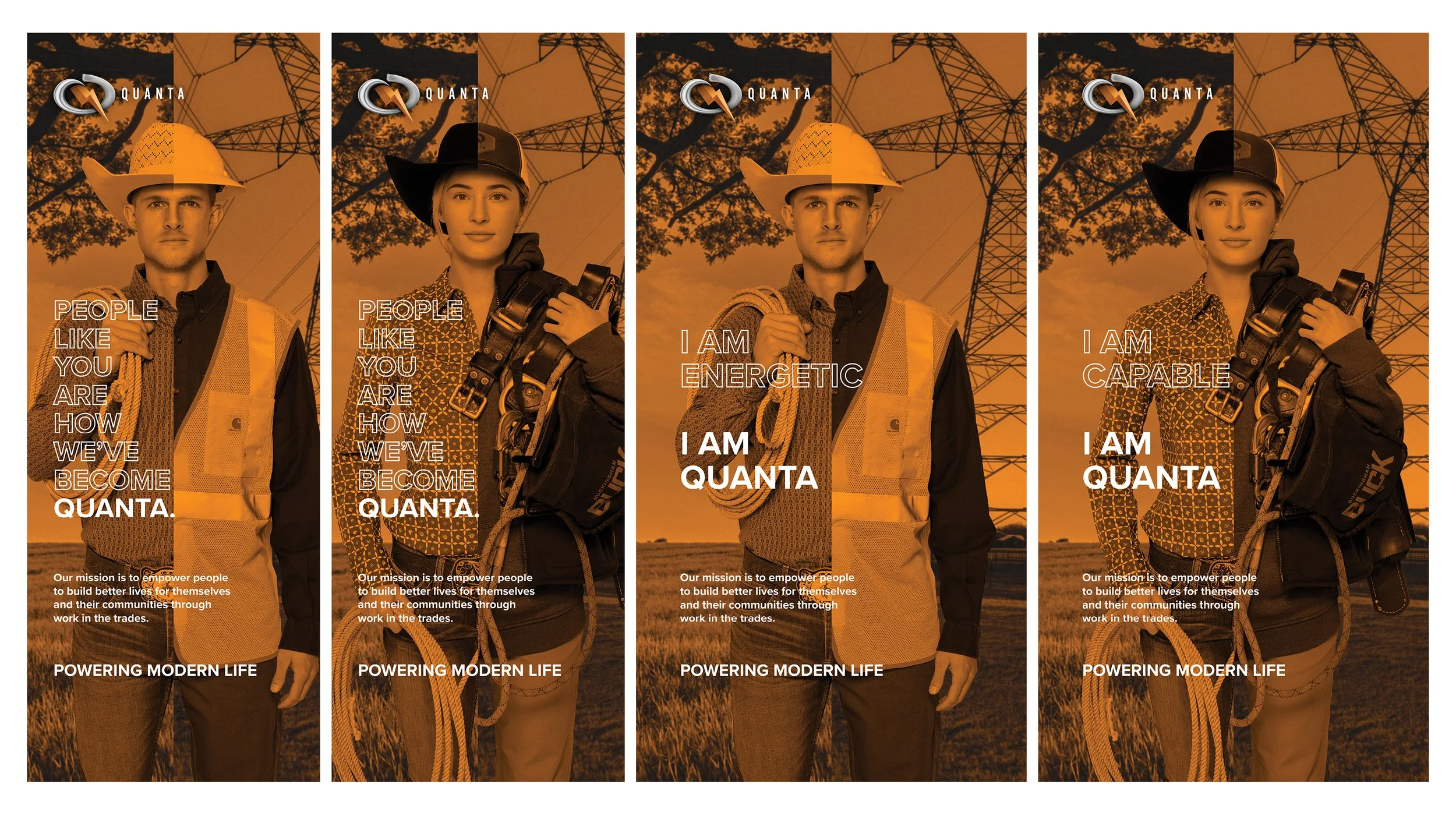
The line is direct and second person, that people like you are part of what powers modern life, which ties the program straight back to the enterprise mission without translating it into corporate language. The campaign and poster copy hold the same register: capability and self reliance, addressed to one person at a time, never to a demographic.
Art direction
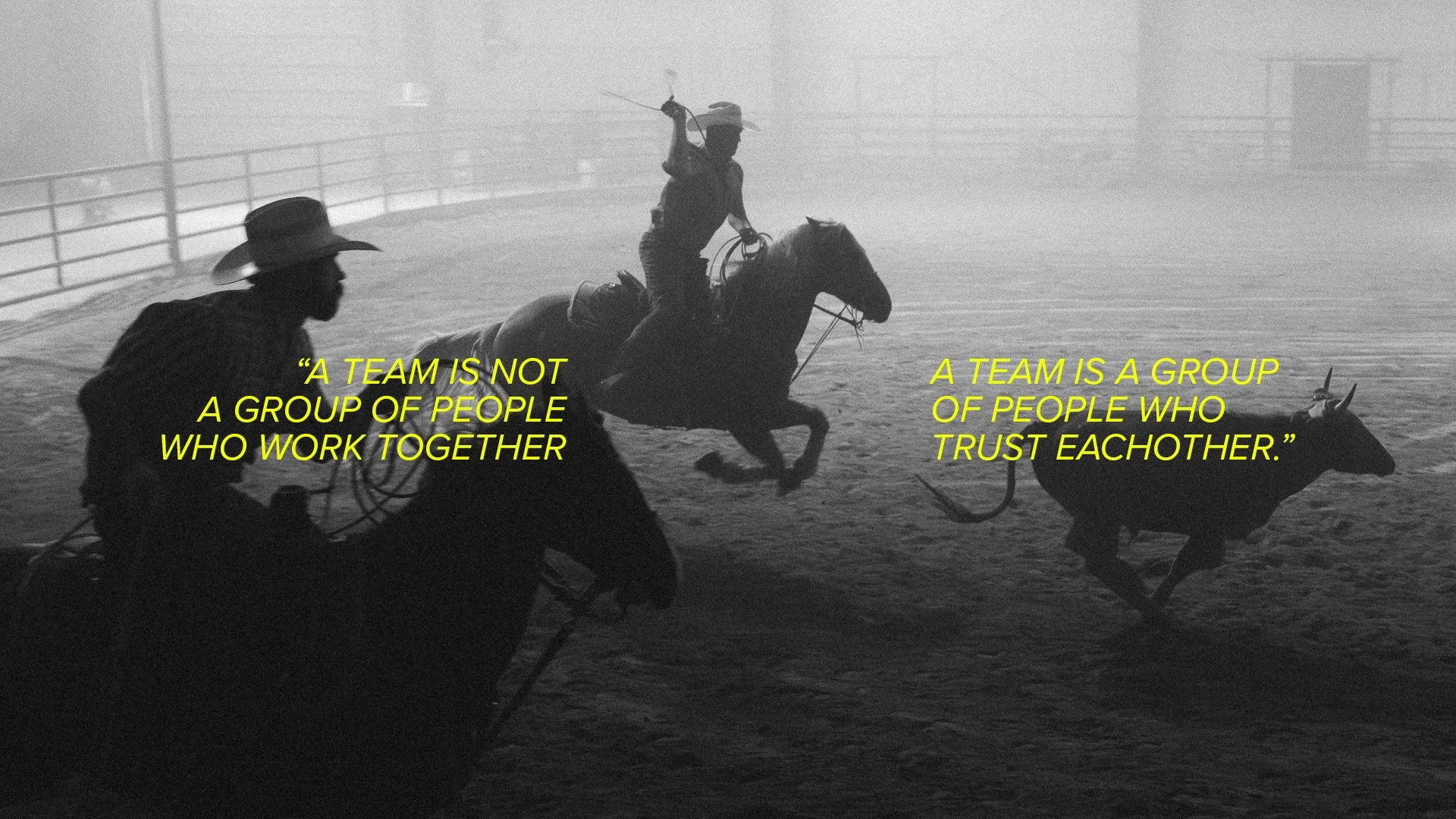
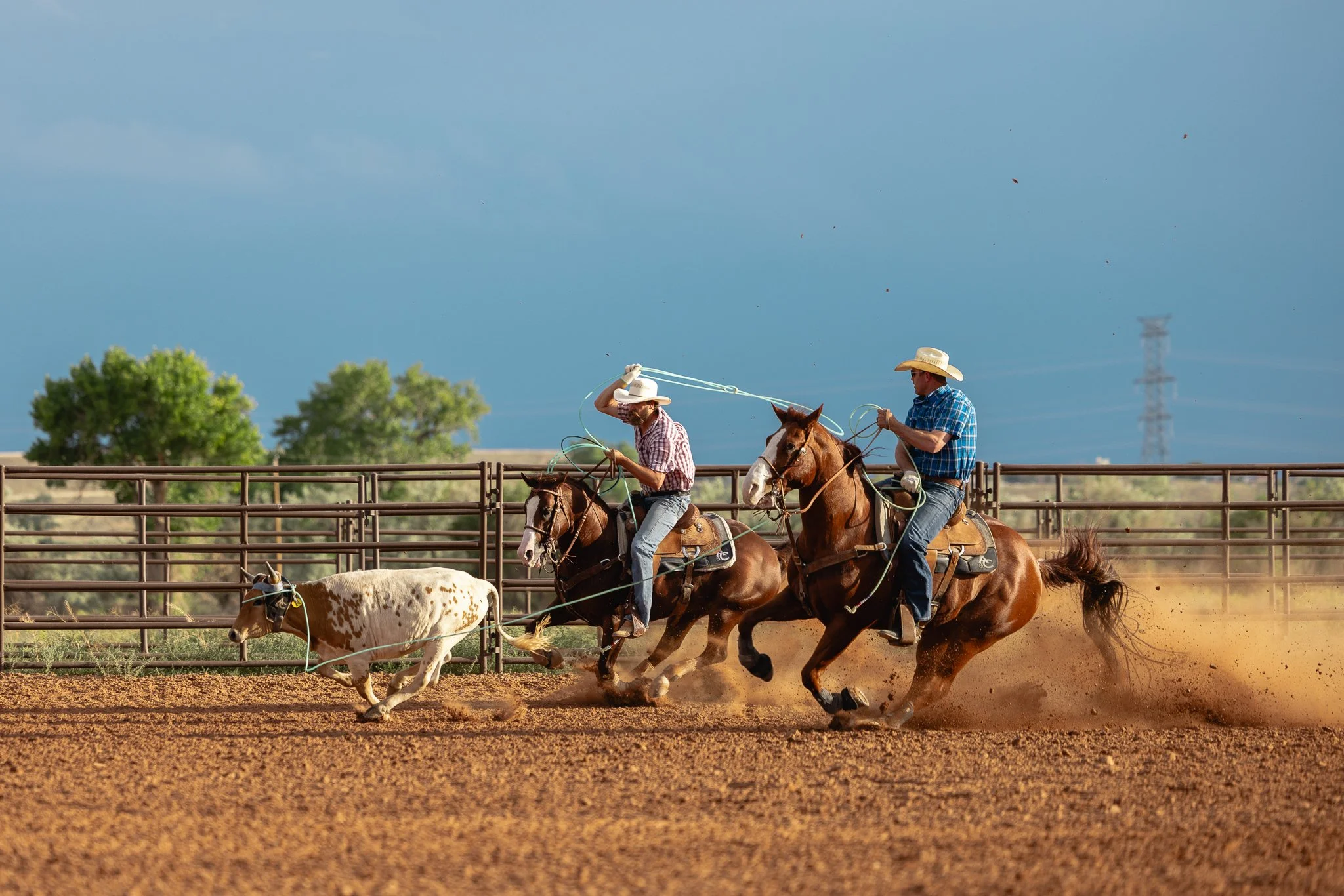
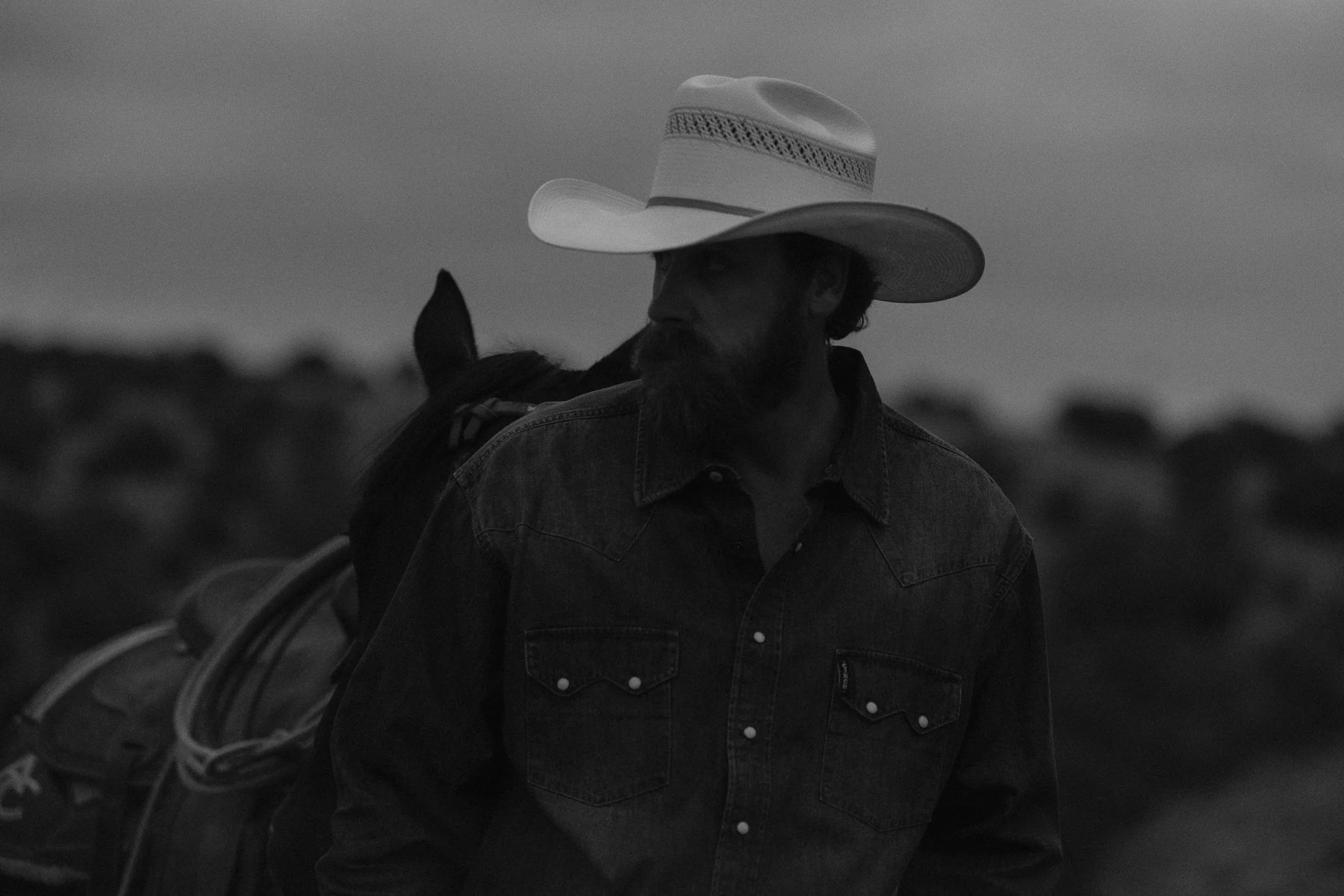
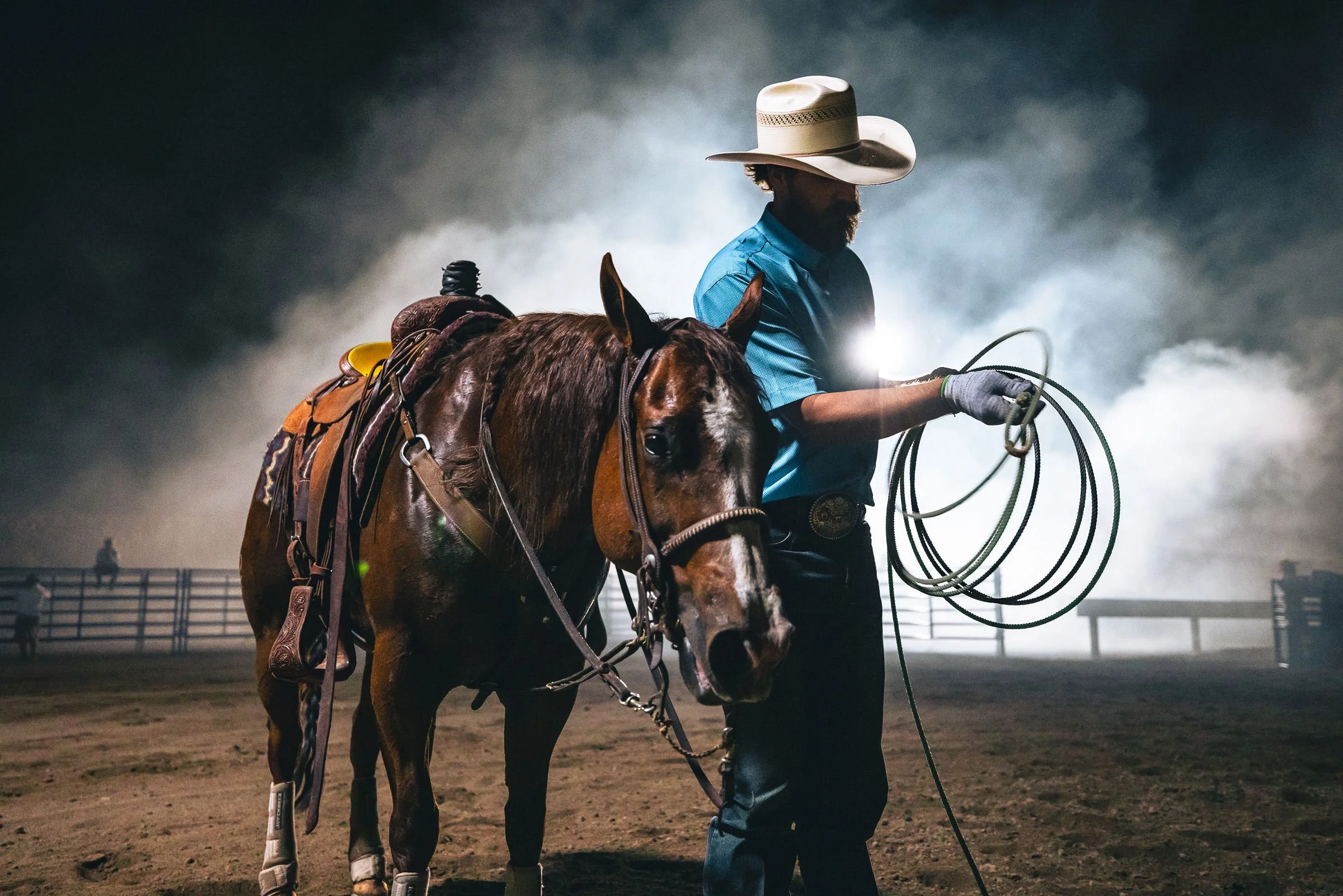
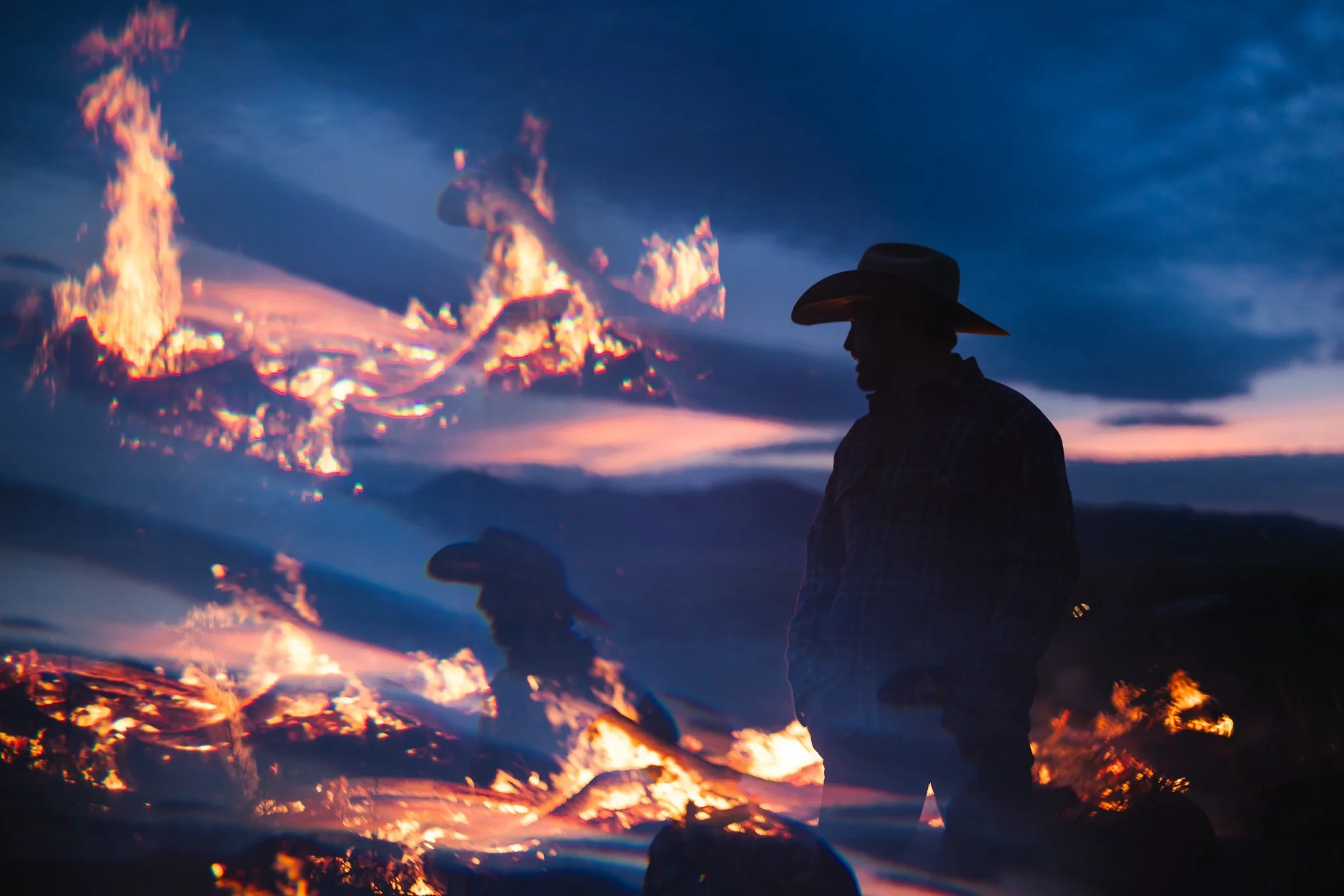
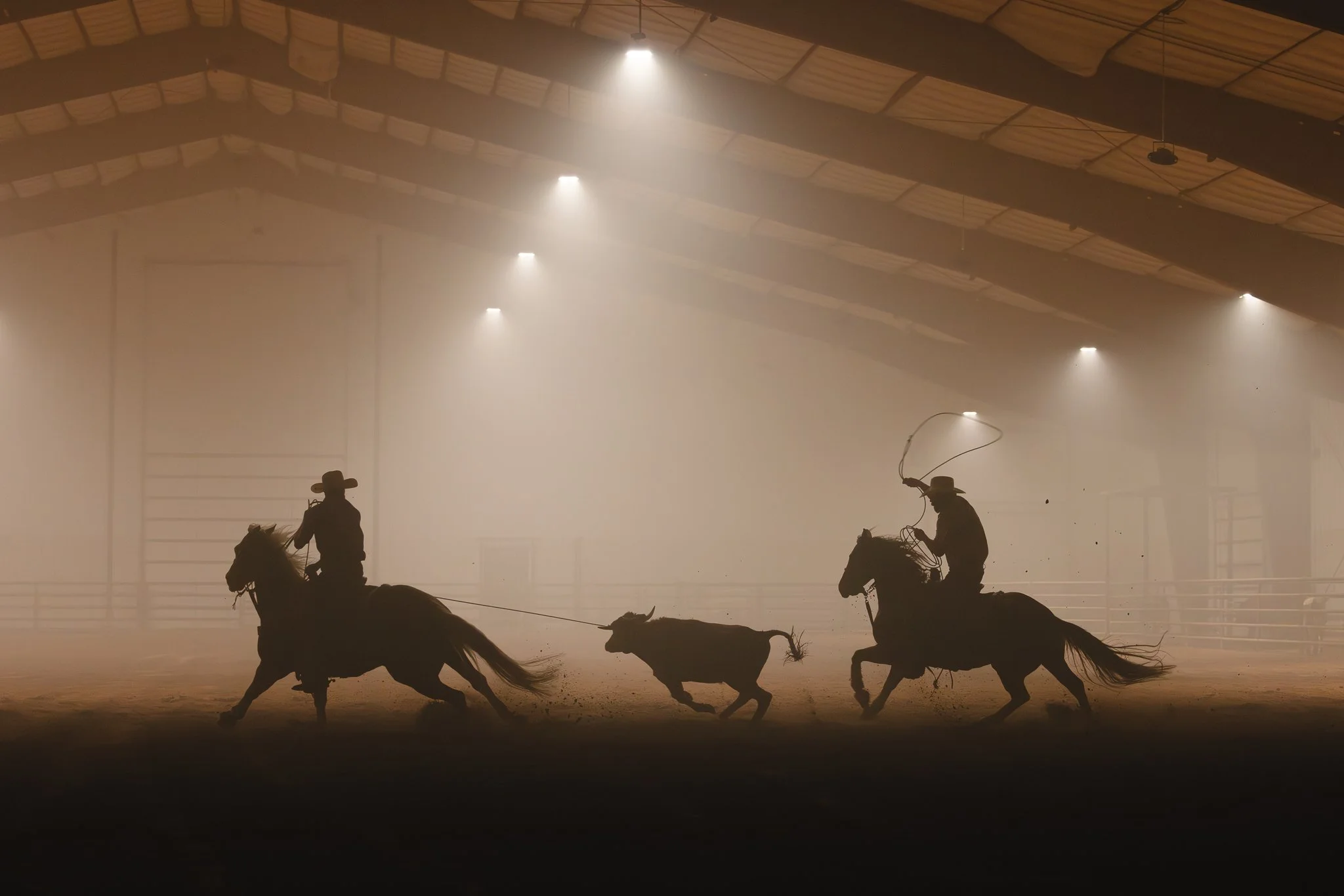
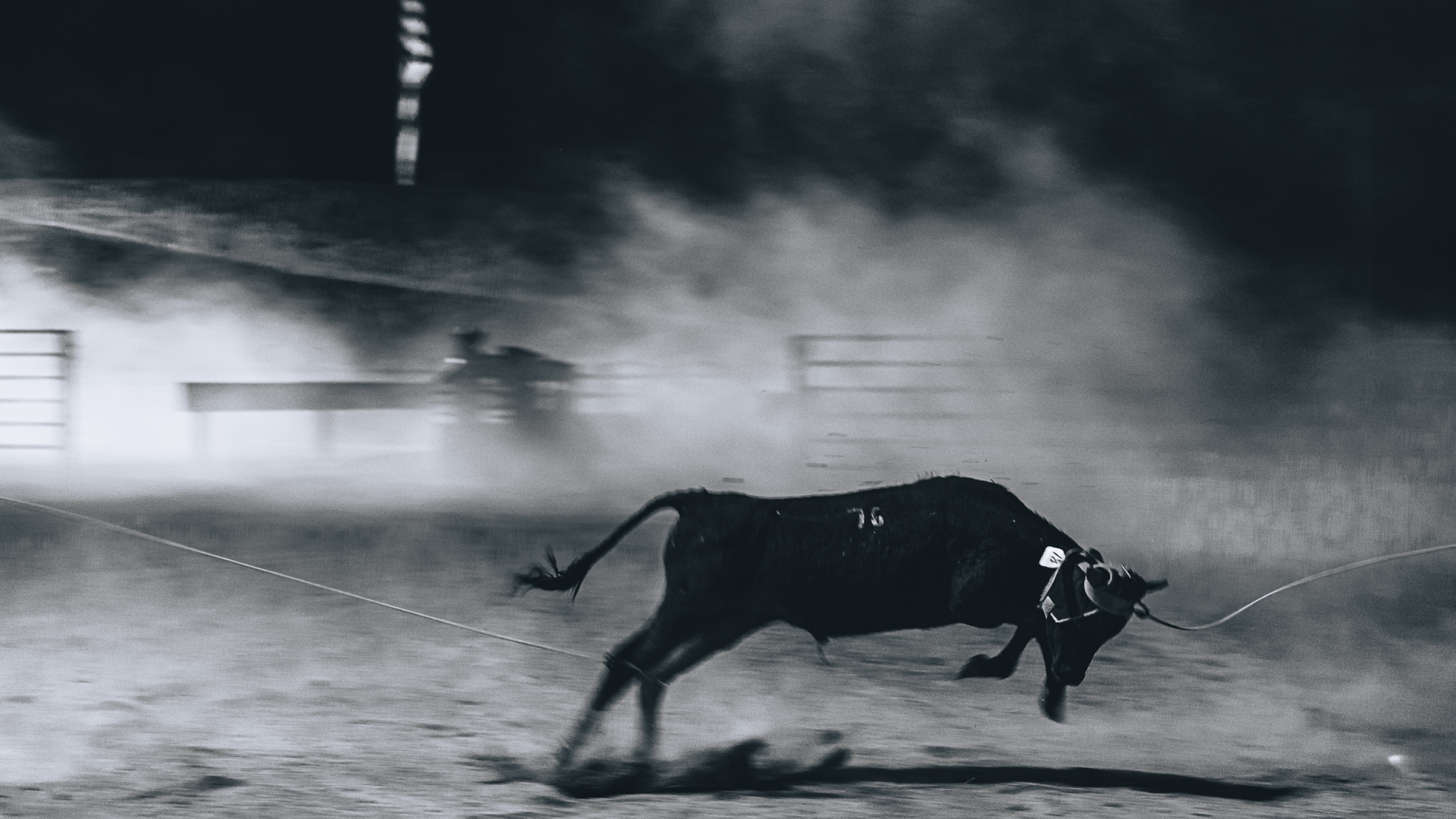
Dust, night arenas, fog under the lights, silhouettes against a wildfire: the rodeo world shot with the exact reverence usually reserved for line work and towers. Neither world gets flattened to force the comparison, and that is the visual argument, that these are two expressions of one temperament. It carried across film and stills, so every frame, in an arena or on a job site, read as one campaign.
Films
More than 20 films, including documentary portraits of Quanta ambassadors talking about discipline, responsibility, and pride in their own words, no corporate message written over the top. We wrote, produced, shot, and delivered the platform end to end, and handing over the script is the choice that lets it land; the second a company writes the words for a rodeo athlete, the whole thing dies. The films ran as the spine of the campaign and cut down for social, events, and channel use.
Campaign & Event Design
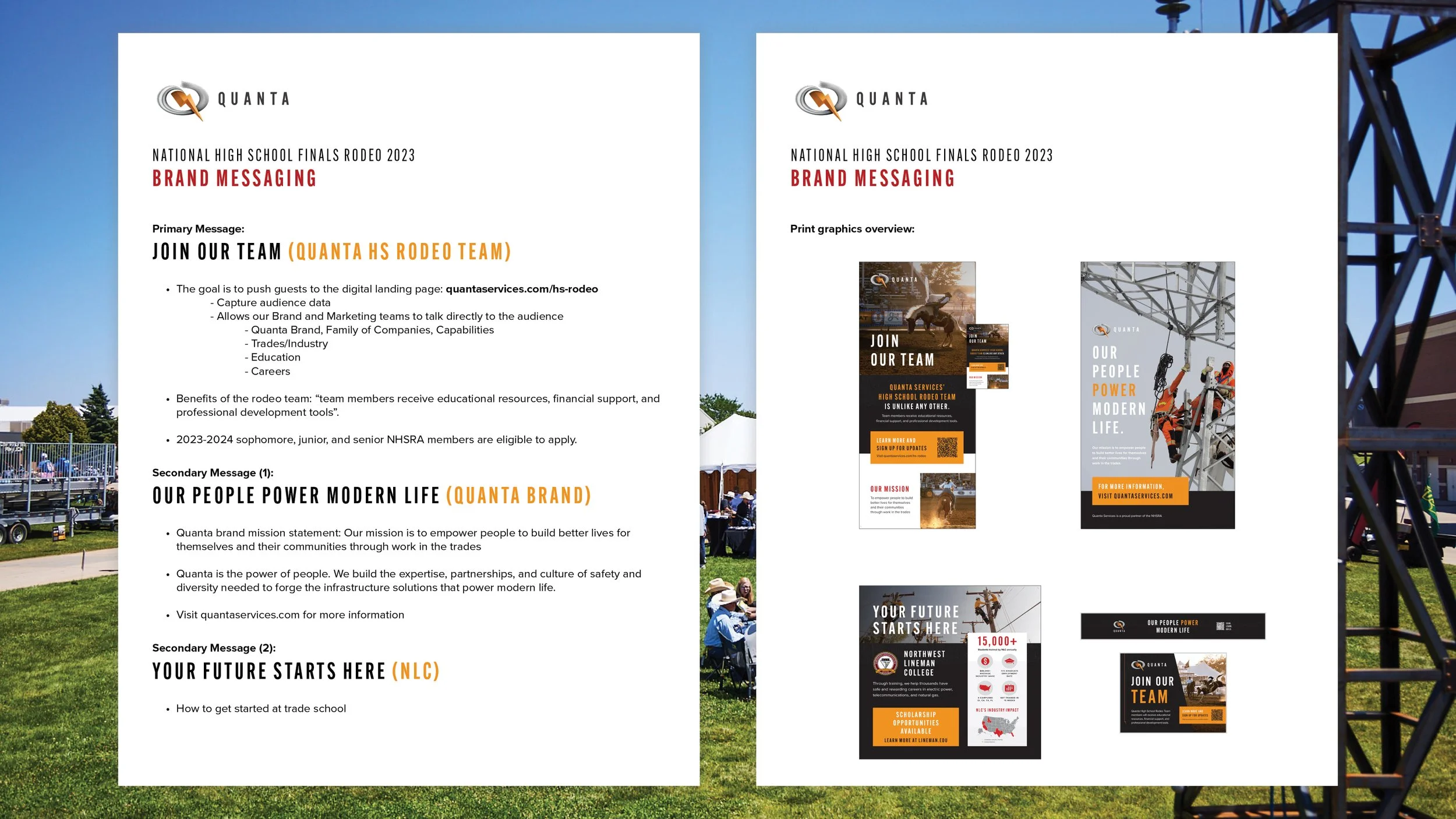
The print and digital system had to work on the ground: in an arena, on a convention floor, in a kid's hand, not just in a feed. We designed the full graphic kit across more than 20 events, the National High School Finals Rodeo, the National Junior High School Finals Rodeo, the FFA national convention and beyond, built so a booth, a banner, and a handout all read as the same brand the films did.
Digital
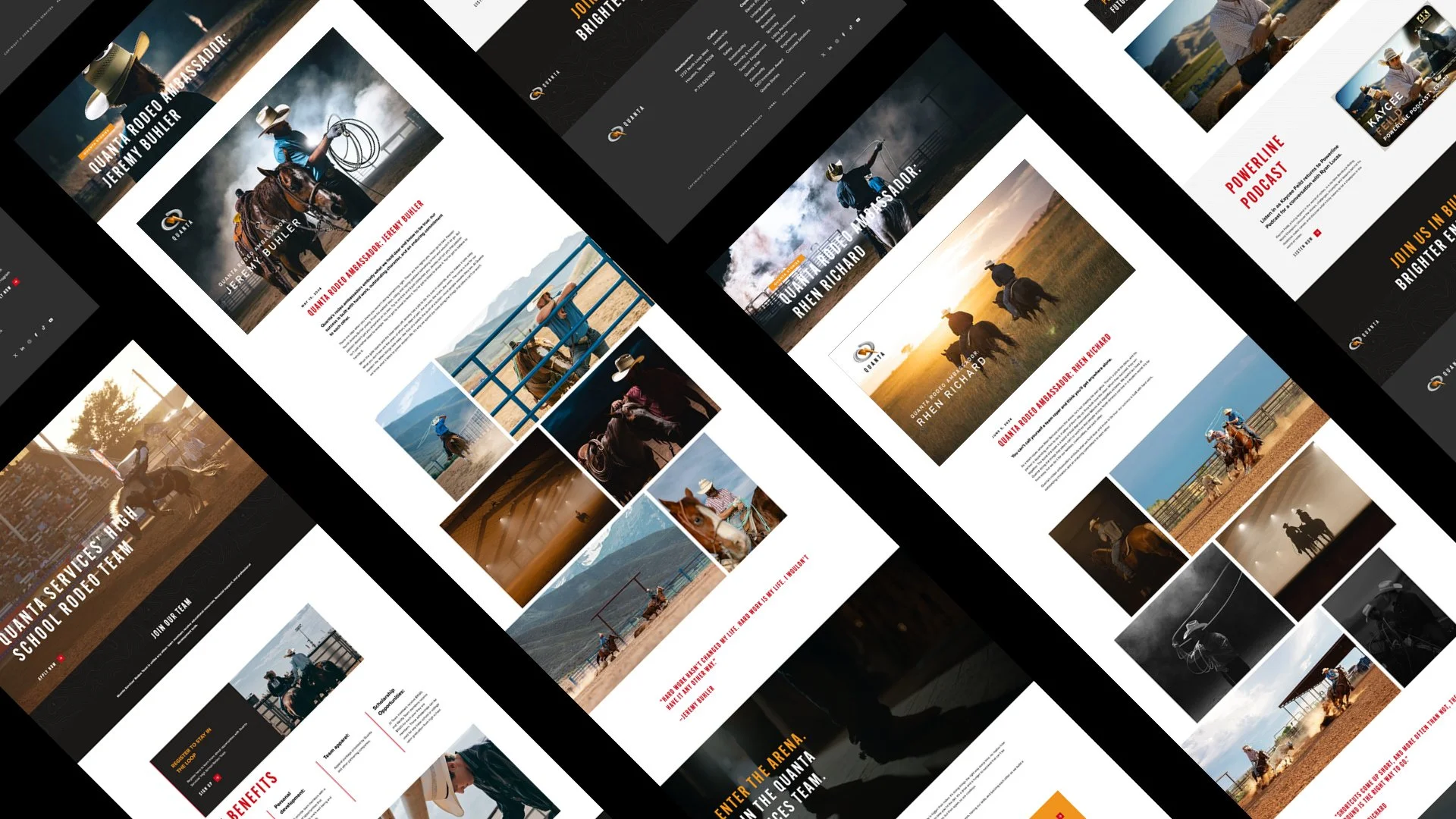
A dedicated home for the rodeo program and the ambassador films, built to turn arena attention into a real next step, where a kid who met Quanta at an event could go learn what the work actually is and how to join.
BEHAVIOR
A brand earns the right to ask by giving first, and Quanta gave for years before it asked. The plan was never a message aimed at these kids; it was a presence built around them, value handed over long before anyone mentioned a career, so the industry's hardest recruiting problem got solved by showing up rather than selling.
High School Rodeo Team
A Quanta rodeo team established with the National High School Rodeo Association, roughly 75 athletes, offering scholarships, development, and real exposure to the trades. Young people joined a team rather than a company, and the value arrived long before any expectation of a career decision.
Events & Access
Across more than 20 national events, students climbed training towers, rode in bucket trucks, and talked to real tradespeople who came from where they came from. Quanta brought its own trades schools into the room, Northwest Lineman College among them, alongside the operating companies, so the people answering questions were the people who actually do the work and teach it. Nobody had to apply to get in.
Content & Messaging
The proof that the approach worked was a film that outgrew it. A portrait of two Belgian draft horses, made for recruitment, traveled inward instead and became the way executives and operating company leaders talk to each other about partnership and pulling together. The clearest sign a piece of work is true is when the company starts using it on itself.